

The Question That Reveals Everything
“What happens here at 7 o’clock in the morning?”
Julie Allen asks this before she asks about countertops, paint colors, or furniture styles.
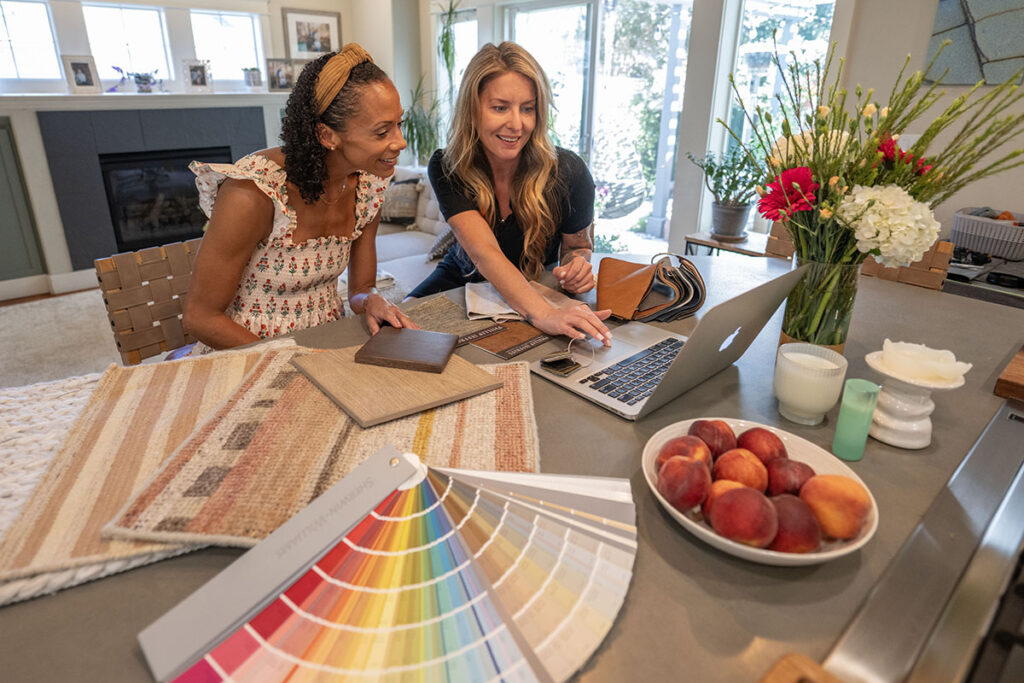
We are sitting inside a beautifully renovated home in Bend, sunlight moving softly across wide plank oak floors and through rooms that feel both intentional and effortless. The house feels calm in the way thoughtfully designed homes often do. Nothing appears overly precious. The rooms feel lived in, functional, and personal.
Julie notices everything.
Not in a critical way. More like someone quietly reading the rhythms of a household.
“That question usually tells me more than anything else,” she says. “How people move through their mornings, where the friction is, what’s not functioning. That’s where the real information is.”
Julie is the founder of High Desert Home Collective and a real estate advisor with Cascade Hasson Sotheby’s International Realty, where her work spans interior design, renovation consulting, luxury staging, furnishing, remodeling guidance, and lifestyle focused real estate strategy throughout Central Oregon.
Recently, Cascade Hasson Sotheby’s launched a marketing partnership with Julie featuring a rotating design and furniture showcase inside the company’s downtown Bend office, located just a few doors down from the historic Tower Theatre. The curated furnishings and accessories inside the space are available for immediate purchase, creating an environment that feels part real estate office, part design studio, and part lifestyle gallery.
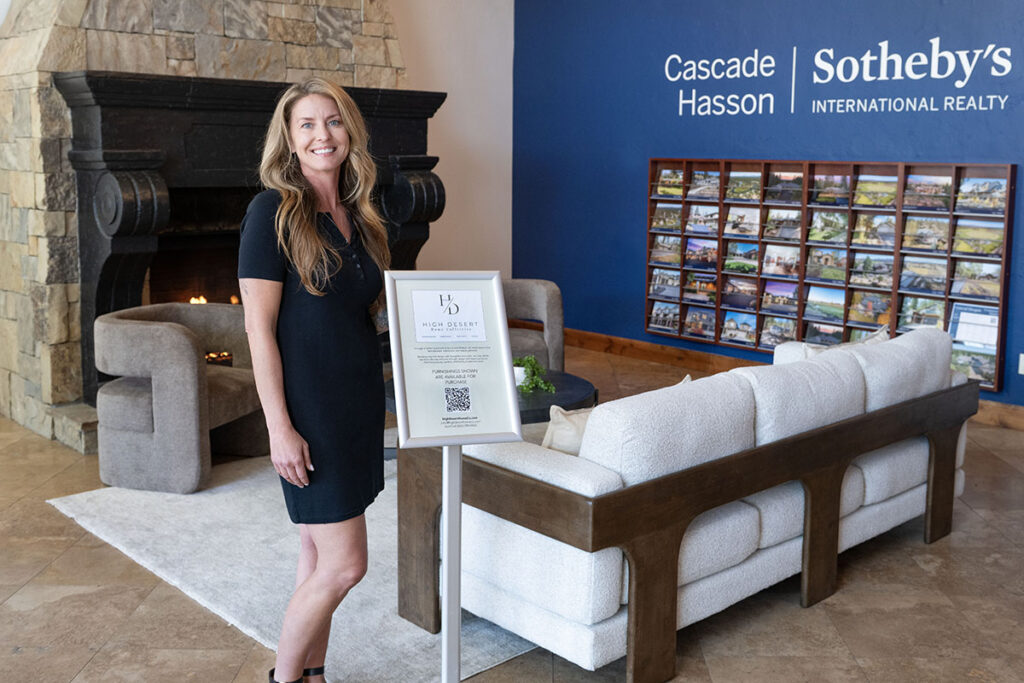
“For us, this partnership is about expanding how we serve clients,” says Brandon Fairbanks, Vice President of Sales for Cascade Hasson Sotheby’s International Realty. “Real estate today is no longer just about transactions. People want guidance around lifestyle, design, functionality, and long term investment decisions. Julie brings another dimension to that experience in a very authentic way.”
Fairbanks says initiatives like the design showcase reflect the company’s broader philosophy around innovation and client experience.
“Forward thinking partnerships like this are part of what continues to keep our brand ranked number one in Bend and throughout Oregon,” he says. “We’re constantly looking for ways to evolve beyond the traditional brokerage model and create more value for the people we serve.”
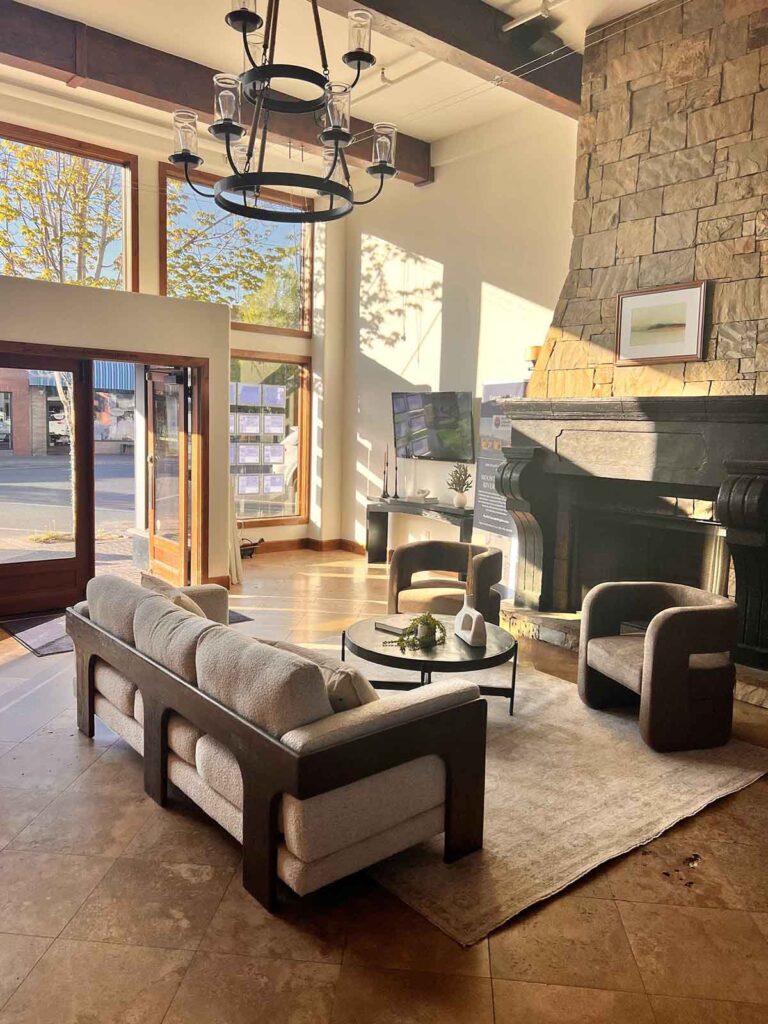
For visitors wandering downtown Bend, the showroom has quietly become another reason to stop by the office. But sitting here in a client’s home, it becomes obvious that furniture is only one small part of what Julie actually does.
⸻
Design That Begins With Human Behavior
Her process begins less with aesthetics and more with behavior.
“A lot of people think design starts with finishes,” she says. “For me, it starts with understanding how someone lives.”
That philosophy sits at the center of her work and explains why many of her clients are relocation buyers arriving in Bend from larger metro areas like Los Angeles, San Francisco, or Seattle. They often come searching for a different pace of life, imagining mornings that feel calmer, homes that encourage gathering, and spaces that reflect who they are becoming rather than who they used to be.
But changing cities does not automatically change daily habits.
Julie understands that intimately.
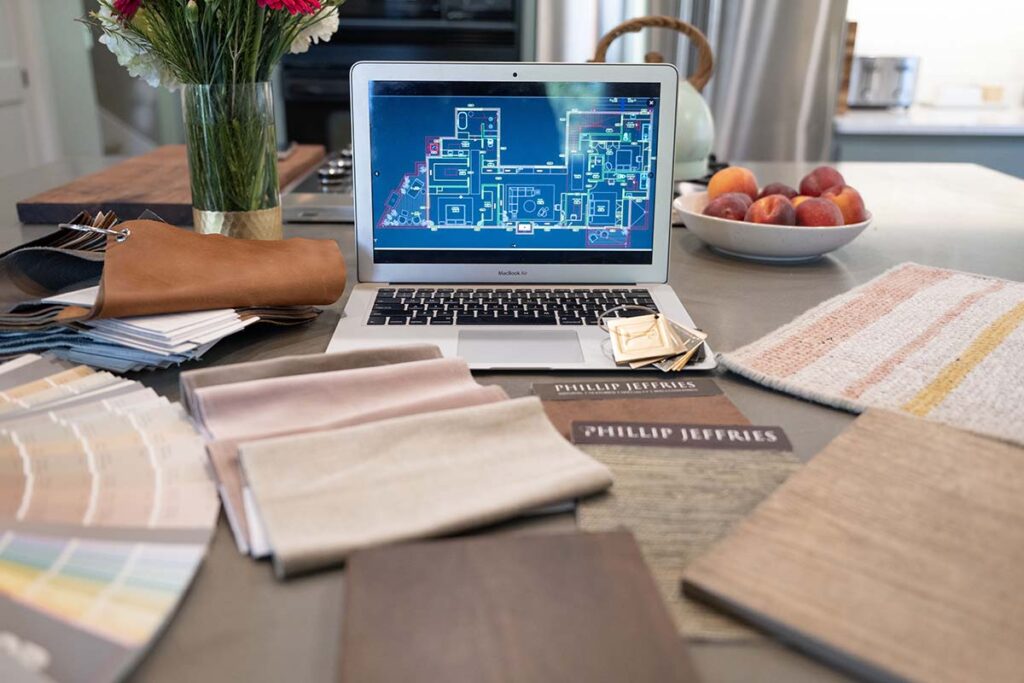
Her process starts with what she calls a complimentary discovery consultation. Not a formal presentation. A conversation. She asks clients how they cook, entertain, recharge, and move through their homes. Whether the kids leave backpacks everywhere. Whether the dogs are allowed on the furniture. Whether they host large dinners or prefer quiet evenings. Whether they are remodeling for resale value, lifestyle improvement, or both.
“I’m trying to understand what lights people up,” she says. “And also what’s quietly driving them crazy.”
She uses the phrase “pain points” often, though not in a corporate sense. More in the domestic sense.
The family that can no longer comfortably fit together during movie nights. The couple colliding in a poorly designed kitchen every morning. The relocation buyer overwhelmed after moving from a compact city apartment into a sprawling Central Oregon home that suddenly feels impossible to furnish properly.
More Than Interior Design
Julie approaches all of it holistically.
The word appears repeatedly throughout her conversations. Holistic not as a branding cliché, but as a recognition that homes affect relationships, routines, stress levels, and emotional wellbeing more than most people realize.
A kitchen layout changes how families interact. Storage impacts conflict. Fabric selection matters if there are children and pets involved. A mudroom in Bend is not simply a mudroom. It becomes command central for skis, bikes, dogs, boots, backpacks, and the realities of Central Oregon living.
“I’m always problem solving,” Julie says.
Once the direction becomes clear, her process moves into strategy and vision. This is where she evaluates not only what a home looks like now, but what it could become with thoughtful renovation guidance and intentional design choices.
From there comes design development: layouts, cabinetry planning, material sourcing, furnishings, renderings, contractor coordination, timelines, and endless spreadsheets tracking lead times, purchase orders, freight charges, and installation schedules.
Julie laughs describing herself as both “left brain and right brain” the dreamer and the doer at the same time.
“That balance is everything in this work,” she says.
Many designers excel creatively but struggle operationally. Others manage projects efficiently but lack vision. Julie moves comfortably between both worlds, discussing emotional connection and countertop durability within the same conversation.
She warns clients away from trendy finishes that age poorly. She explains scale constantly, why oversized furniture can ruin flow even in large homes. She talks openly about renovation stress, contractor realities, and decision fatigue.
“A lot of designers care more about showcasing their own style,” she says carefully. “For me, it’s more important to understand what works for my clients.”
⸻
Why Central Oregon Matters to Her
That restraint feels refreshing.
Nothing about Julie’s approach feels performative or overly polished. She speaks thoughtfully, often pausing before answering questions. At one point, while discussing creativity, she mentions that when she gets stuck on a project, she leaves the computer and goes outside.
“Even if it’s just walking around the block,” she says. “I have to step away.”
Nature is not simply a backdrop to Julie’s life in Central Oregon. It is part of how she recalibrates.
She talks about water often. Paddleboarding at sunset. Rivers quieting mental noise. The reset that comes from being outside long enough for ideas to settle into place naturally. Some designers reference inspiration in abstract ways. Julie speaks about it physically. Movement. Air. Light reflecting off water. The feeling of stepping away from screens and schedules long enough to think clearly again.
That connection to the outdoors quietly informs the homes she creates.
The spaces are rarely about perfection or performance. They are designed around how people actually want to feel after a long ski day at Mount Bachelor, after a morning on the Deschutes River, after hosting friends on a summer evening when the doors stay open long past sunset.
The homes she creates reflect the lifestyle that draws people to Central Oregon in the first place. Spaces designed not simply to impress guests in photographs, but to support actual living. Gathering after skiing. Hosting dinners. Drinking coffee slowly while snow falls outside. Letting the outdoors shape the mood of the interior rather than compete with it.
⸻
The Reveal Is Never Just About Design
Eventually every project reaches the reveal phase, Julie’s favorite part of the process.
“That’s when they walk in and it finally feels like theirs,” she says.
Sometimes clients hug her. Sometimes they cry. Often they simply stand quietly for a moment before speaking.
Then life resumes differently inside the house.
People entertain more. Families gather more naturally. Stress softens. Homes function the way they were always supposed to.
Toward the end of our conversation, Julie offers what feels like the clearest explanation of her work.
“I want people to enjoy their lifestyle,” she says.
Not just admire their home.
Actually live well inside it.
For Julie, the work has never really been about creating rooms that photograph beautifully. It is about helping people feel more connected to the life happening around them.
Or as she puts it:
“My goal isn’t simply to create beautiful spaces. It’s to help people live better in the homes they already have or confidently step into the next chapter of the one they’re creating.”

Julie Allen
(805) 390-9822
julie@highdeserthomeco.com