
At J Bar J, Sandy Vaughn, Staff Development Coordinator and Equine Director, teaches kids that a horse is never just a horse.
A horse is a barometer. A teacher. A partner. Sometimes, a quiet truth-teller.
Vaughn joined J Bar J in 2001 and has spent more than 25 years serving youth through a variety of roles, including direct care staff, resident monitor, case manager, program manager, director, and CPI instructor. Throughout her career, she has worked alongside experts from across the region and the country to develop treatment approaches and staff development programs grounded in proven best practices.
Today, she combines that extensive experience working with youth with a lifelong connection to horses, leading J Bar J’s Equine Program.
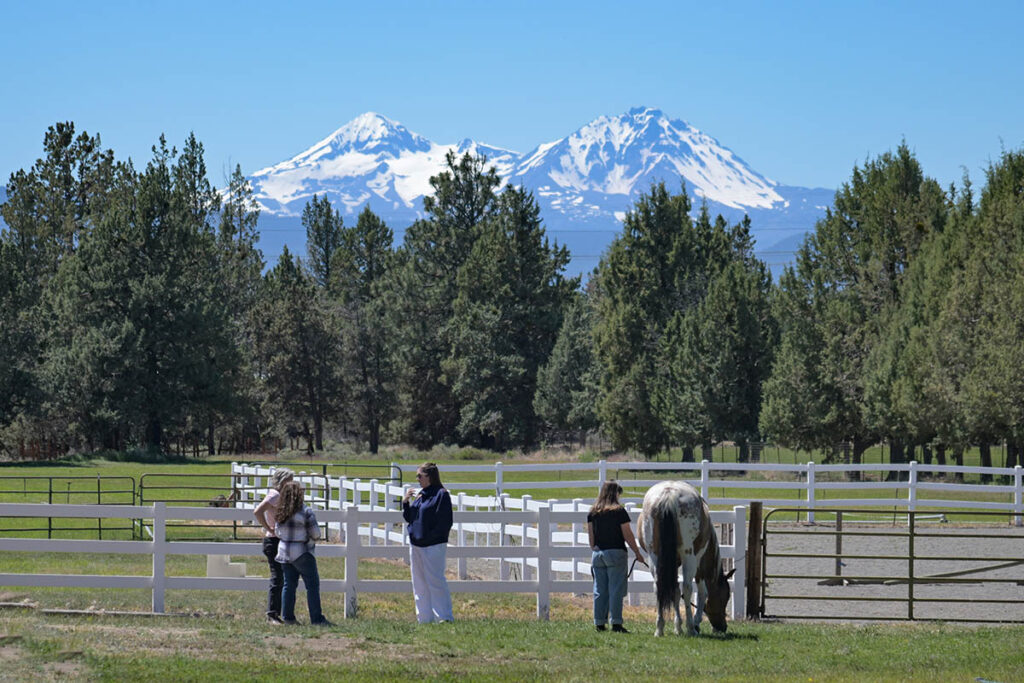
For decades, J Bar J has been one of Central Oregon’s most trusted resources for young people facing difficult circumstances. Through mentoring, housing support, shelter services, youth development programs, and family-centered services, the organization helps kids who are struggling find stability, confidence, and a path forward. Whether a young person is navigating anxiety, grief, family challenges, homelessness, or simply the pressures of growing up, J Bar J creates opportunities for healing and growth. The organization serves youth across Central Oregon, meeting them where they are and helping them move toward healthier, more stable futures.
Under Vaughn’s leadership, the Equine Therapy program adds a unique dimension to that work.
Out in a pasture or arena, the lessons are different. There are no desks, no lectures, and no shortcuts. Instead, there is a horse, a young person, and a relationship that must be built one moment at a time.
Before a young person ever climbs into a saddle, Vaughn teaches them something more important.
“You have to meet the horse first.”
That means learning to listen. To pay attention. To be present. To build trust instead of demanding it.
“These kids can’t hide from the horses,” Vaughn explains. “The horse cares about who you are right now.”
Horses are prey animals, and their survival depends on paying close attention to the world around them. They constantly read body language, emotion, tension, confidence, and uncertainty. If a young person is distracted, anxious, or trying to pretend everything is fine, the horse often knows before anyone else does.
That’s where the learning begins.
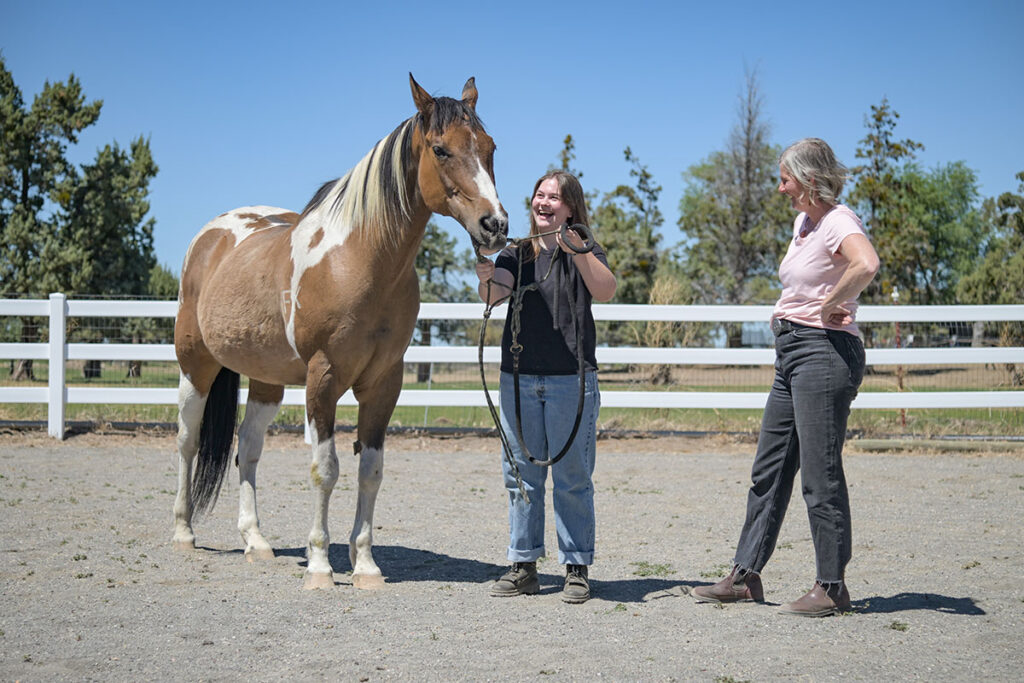
During a recent session, 18-year-old Avery worked with Coffee, a powerful horse whose strong personality made him an ideal teacher. Rather than pulling him where she wanted him to go, she learned how to invite him into a partnership. Sometimes Coffee responded immediately. Other times he preferred the grass beneath his feet and had different ideas, creating opportunities for Avery to practice patience, communication, and trust.
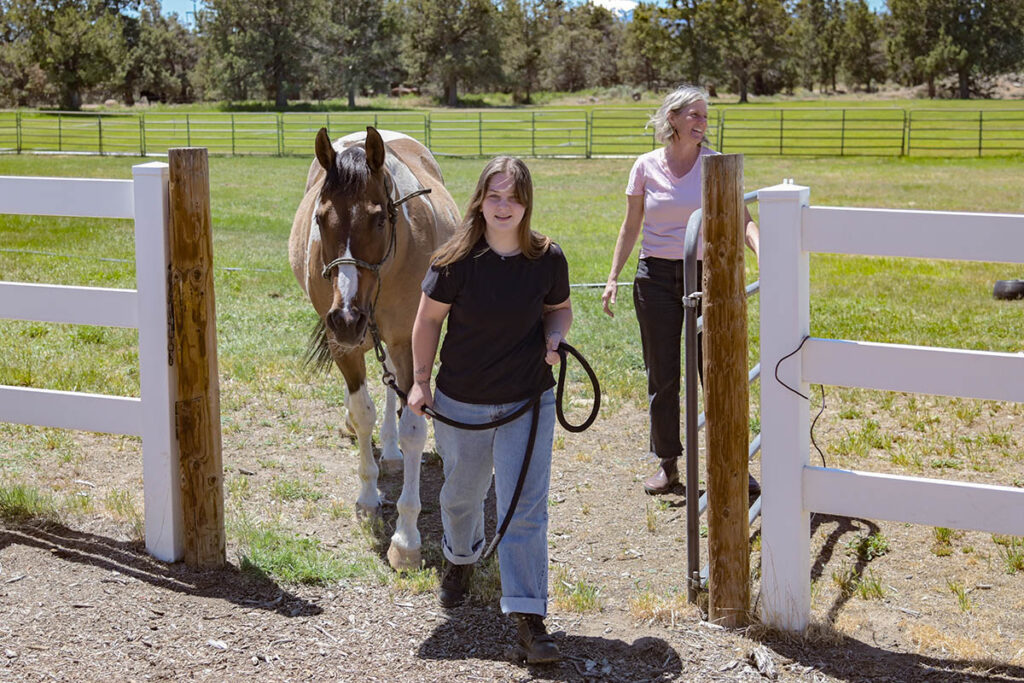
The connection between horse and human is something today’s kids understand almost instinctively. Like a Bluetooth connection, it doesn’t happen because one side demands it. It happens when both sides are tuned in, paying attention, and willing to connect.
Watching from the sidelines was longtime horsewoman Heather Osgood, a real estate advisor with Cascade Hasson Sotheby’s International Realty and a familiar face in Central Oregon’s equestrian and ranching communities. Osgood is sponsoring the upcoming Oregon High Desert Classic horse show in July, which benefits J Bar J. Horses have been a central part of her life since childhood, and the program’s approach resonated deeply with her.
“You have to be here and now,” Osgood said. “You can’t be thinking about work. You can’t be thinking about everything else that’s going on. The horse knows.”
Drawing from decades of riding and competing, Osgood recognized the lessons unfolding in front of her.
“These animals are magic,” she said. “It’s all a relationship.”
Watching Avery work with Coffee, she saw how the experience extends far beyond the pasture. As young people learn to build trust and communicate with a horse, they often begin building those same skills within themselves.
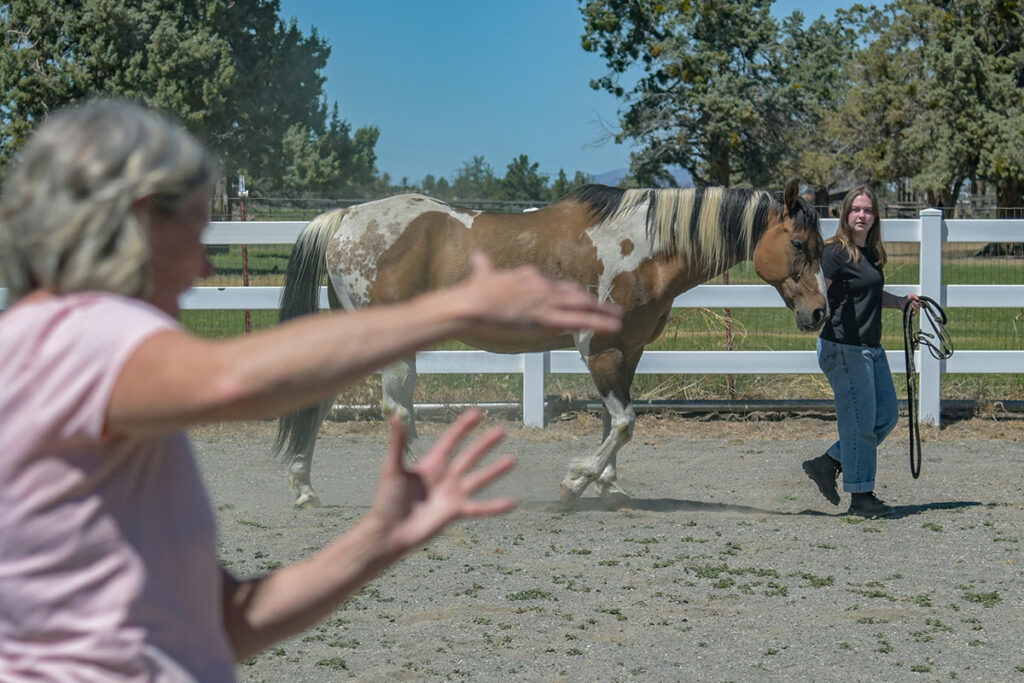
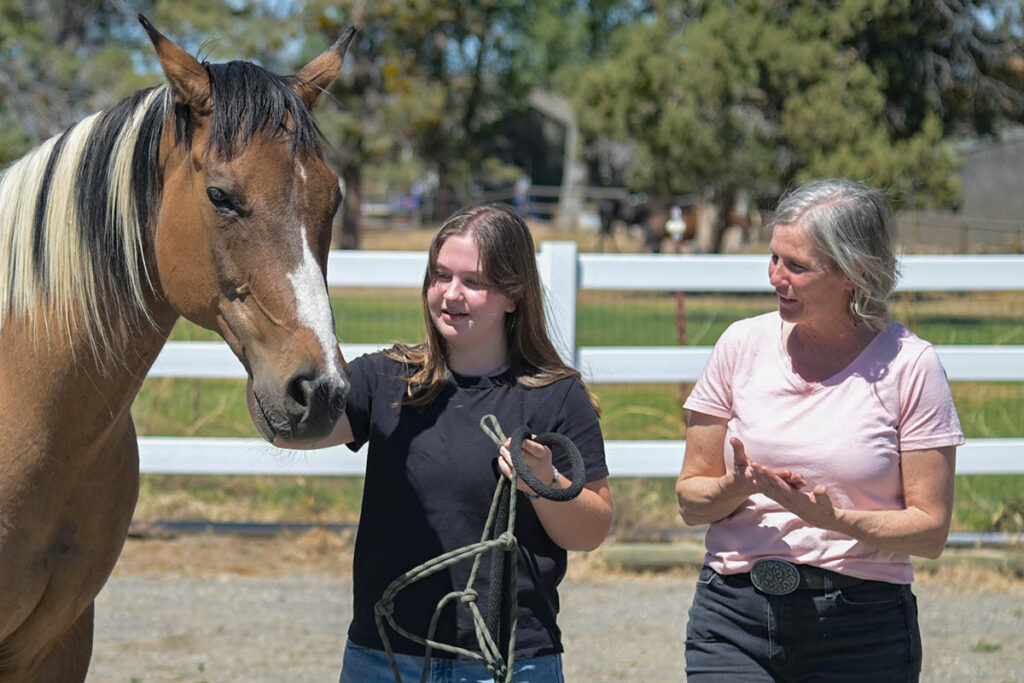
The horses teach patience, accountability, and assertive communication; neither passive nor aggressive communication will result in a healthy connection. Most importantly, they teach presence. While many young people carry worries about the future or burdens from the past, horses live primarily in the present moment. To connect with them, kids must learn to do the same.
For youth working through anxiety, grief, trauma, or major life transitions, that can be a powerful experience.
Vaughn has seen it happen countless times. A guarded child begins to open up. A nervous child learns confidence. A young person who struggles to trust discovers what a healthy relationship feels like.
One young participant once looked at her horse and blurted out, “This horse can see into my soul.”
Vaughn laughed at the memory, but she understood exactly what the girl meant. The horse wasn’t responding to the mask she wore or the image she tried to project. It was responding to who she really was in that moment.
Another time, Vaughn watched a horse named Clover walk directly to a young girl preparing for a difficult therapy session about a traumatic event in her life. Clover lifted her head, whinnied, and walked across the pasture to greet her.
“I’ve seen that stuff all the time,” Vaughn said. “I can’t explain it any other way than the horse actually decided. Like, ‘Hey kid, I’ve got you.’”
The horses aren’t doing the work for the youth. They’re helping young people discover they can do the work themselves.
That’s why J Bar J continues to invest in the program. Alongside mentoring, shelter services, housing programs, Big Brothers Big Sisters of Central Oregon, and other youth-focused initiatives, J Bar J’s Equine Program offers something many struggling young people have never experienced before: a relationship built on trust, mutual respect, accountability, and authentic connection.
Today, however, the program faces a new challenge. Following the closure of the Academy at Sisters, which previously helped support the equine program through tuition revenue, funding must now come from grants, donations, and community support.
The need is real. The horses require year-round care, feed, veterinary services, supplements, and maintenance. Vaughn estimates the program operates on a remarkably lean budget, but continued support is essential to ensure that every child who could benefit from the experience has access to it.
Community support is also strengthened through events such as the Oregon High Desert Classic, one of the Northwest’s premier hunter-jumper competitions. The annual event benefits J Bar J Youth Services and helps raise awareness of programs that support vulnerable youth throughout Central Oregon. For horse lovers like Osgood, supporting both the event and J Bar J’s equine program is a natural fit.
For Vaughn, the mission remains simple: help youth build the skills needed to create a healthy relationship with a horse in an environment where everyone, including the horse, has a voice and choice. These skills then translate to their relationships with others.
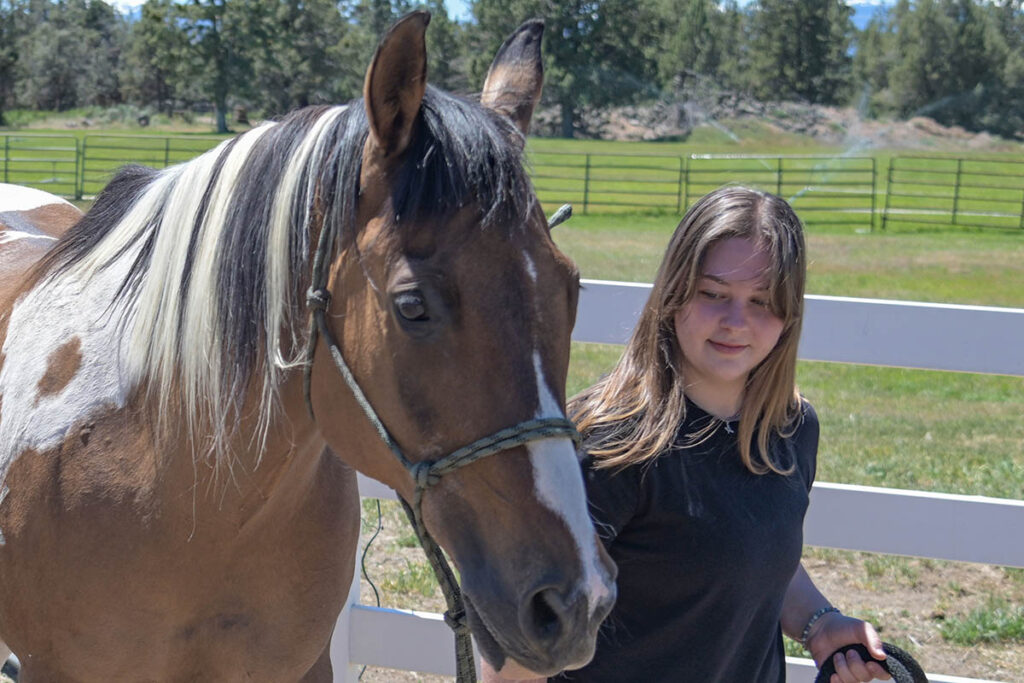
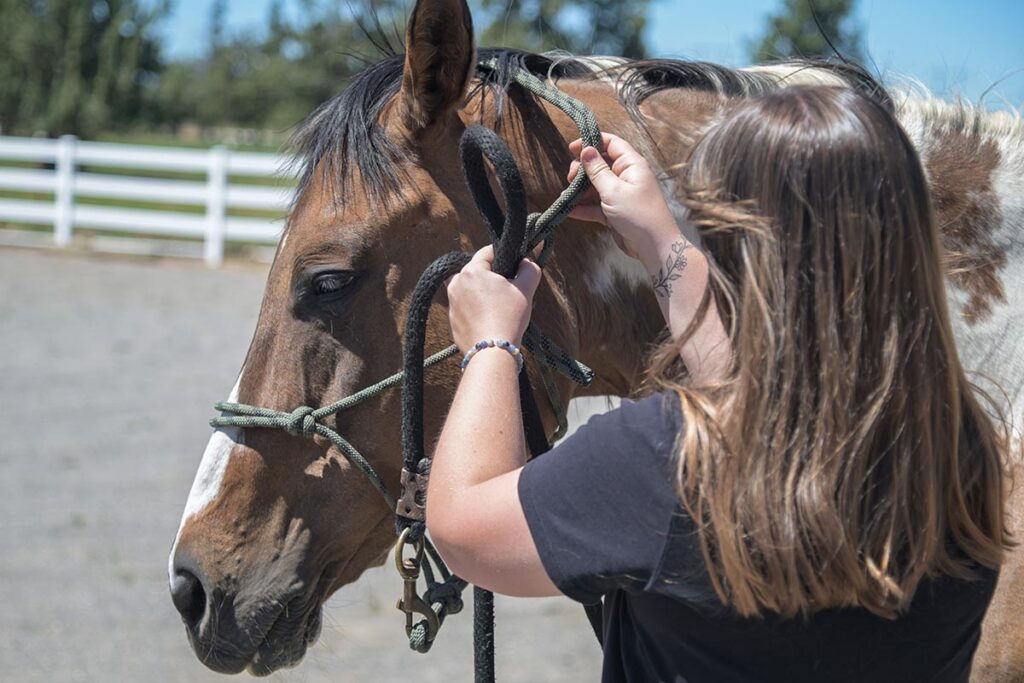
At the end of her session with Coffee, Avery reflected on what she had learned.
She said. “You can’t force it. You have to be patient, pay attention, and build trust first. Once you connect, everything gets easier.”
And perhaps that is the lesson the horses have been teaching all along.
The strongest connections aren’t built through force or control.
They’re built through trust.
_________________________
Please consider donating to J Bar J.